Have you ever had a sudden, severe toothache and thought, “Do I really need an Emergency Dentist Calgary?” What if your tooth breaks while eating or your gums suddenly start bleeding? Dental problems can happen at any time, and they can be stressful. Knowing what to do can help you get the right care before the problem gets worse.
What Is Considered a Dental Emergency?
Are you dealing with severe tooth pain, a broken tooth, swelling, or bleeding? These problems may need quick dental care. A dental emergency is usually a situation that causes a lot of pain, damages a tooth, or may lead to an infection.
Some common dental emergencies include:
Severe or ongoing tooth pain
Broken, cracked, or chipped teeth
A permanent tooth that has been knocked out
Swelling around the tooth, gums, or face
Signs of a dental infection
Bleeding that does not stop easily
But how do you know when you really need urgent care? If your pain is severe, the swelling is getting worse, or you have injured your mouth, it is better to contact a dentist and explain what happened.
Why Should You Not Ignore a Severe Toothache?
Is your toothache getting worse instead of getting better? Could it be something more than normal tooth sensitivity?
Severe or ongoing tooth pain can happen for many reasons. It may be caused by tooth decay, an infection, a cracked tooth, or a problem inside the tooth. Sometimes the pain may go away for a while. Does that mean the problem is gone? Not necessarily.
Wouldn’t it be better to have your tooth checked before the pain becomes worse? An emergency dental visit can help find the cause of the pain and help your dentist decide what treatment you may need.
What Should You Do If a Tooth Gets Knocked Out?
What should you do if an accident knocks out one of your permanent teeth? Should you simply put the tooth somewhere and wait?
It is important to act quickly. Pick up the tooth by the crown, which is the part you normally see in your mouth. Try not to touch the root. If the tooth is dirty, gently rinse it with clean water. Do not scrub the tooth or its root.
Keep the tooth moist and contact a dentist as soon as possible. Getting dental care quickly may give you a better chance of saving the tooth.
What Should You Do If a Tooth Breaks or Cracks?
Have you ever felt your tooth crack while eating something hard? Does every broken tooth need emergency treatment?
Not always. It depends on how badly the tooth is damaged. A small chip may not require immediate care, but a large break, severe pain, or a tooth with exposed inner tissue should be checked as soon as possible.
An emergency dentist can examine the tooth and explain your treatment options. Depending on the damage, the tooth may be repaired or restored with treatment such as a dental crown.
Can Swelling Be a Sign of a Dental Emergency?
Have you noticed swelling around your tooth, gums, jaw, or face? Could it be a sign of an infection?
Dental swelling should not be ignored, especially if you also have severe pain, fever, a bad taste in your mouth, or trouble opening your mouth. These symptoms may be linked to a dental infection that needs professional care.
So, why wait and hope the swelling goes away on its own? Getting your tooth checked can help find the cause and prevent the problem from becoming more serious.
What Can You Do Before Seeing an Emergency Dentist?
What can you do while waiting to see a dentist?
You can gently rinse your mouth with clean water. If you have swelling, you can place a cold compress on the outside of your cheek. Try to avoid chewing on the painful side of your mouth.
Should you try to treat a serious dental problem on your own? It is better to let a dental professional check it. Home remedies may give you temporary relief, but they usually do not fix the actual cause of the problem.
How Can You Reduce the Risk of a Dental Emergency?
Can every dental emergency be prevented? Unfortunately, no. However, taking good care of your teeth can help reduce the risk of many common dental problems.
Can regular dental checkups help? Yes. Regular visits allow your dentist to find cavities, damaged fillings, gum problems, and other issues before they become more serious.
What else can you do? Brush your teeth twice a day, floss regularly, wear a mouthguard during sports, and avoid biting hard objects with your teeth.
When Should You Contact an Emergency Dentist Calgary?
Are you experiencing severe tooth pain, facial swelling, bleeding that will not stop, or a serious dental injury? Should you wait and see if the problem gets better on its own?
Getting professional dental advice can help you understand what is wrong and what treatment you may need. An Emergency Dentist Calgary can examine your dental problem and recommend the right treatment based on your condition.
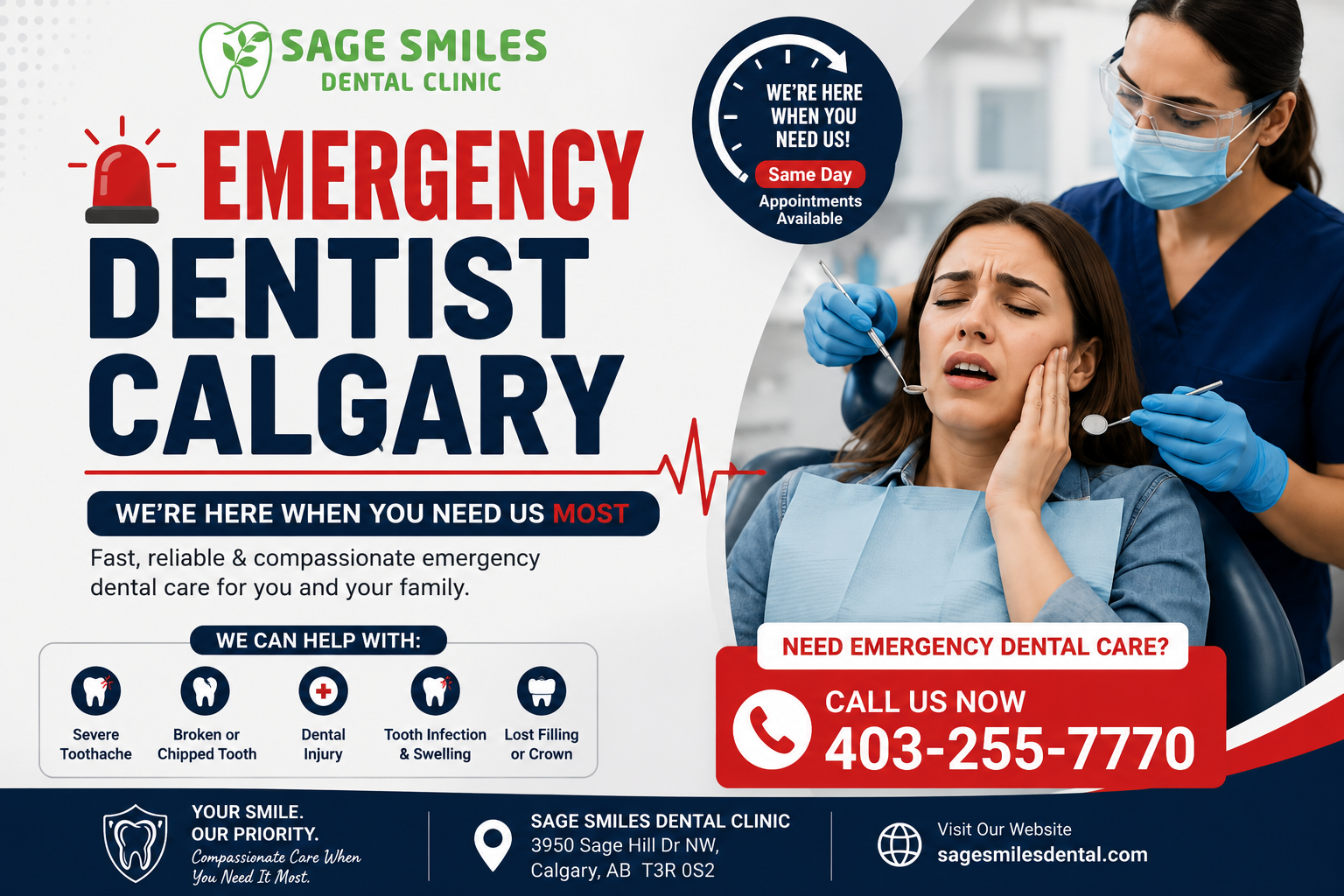
At Sage Smiles Dental Clinic, patients can receive professional care and guidance for sudden dental problems. If you are dealing with a dental issue that needs quick attention, getting it checked early can help protect your teeth and your smile.
Conclusion
What should you do when a dental problem suddenly happens? The best thing is not to ignore it. Severe tooth pain, swelling, a broken tooth, or a dental injury may need professional attention.
If you are unsure about your symptoms, contacting an Emergency Dentist Calgary can help you understand the problem and find the right treatment. At Sage Smiles Dental Clinic, patients can get professional guidance for urgent dental concerns. Getting timely dental care can help protect your oral health and prevent a small problem from becoming a bigger one.