- info@sagesmilesdental.com
- 2120 - 3950 Sage Hill Drive NW, Calgary, Alberta, Canada

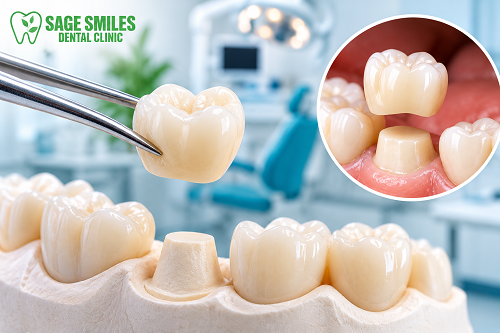
A damaged, cracked, weakened, or severely decayed tooth can affect more than just your smile. It may cause discomfort while eating, sensitivity to hot and cold foods, difficulty chewing, and concerns about your appearance. When a tooth has lost significant structure, a regular dental filling may not provide enough support. A dental crown can help restore its strength, shape, function, and natural appearance.
At Sage Smiles Dental Clinic, we provide dental crown solutions in Calgary NW to help patients protect damaged teeth and maintain healthier smiles. Our approach focuses on understanding your dental concerns, assessing the condition of the affected tooth, and recommending a suitable restorative treatment based on your individual needs.
Whether you have a broken tooth, a large filling, extensive tooth decay, or a tooth that has undergone root canal treatment, our dental team can assess whether a dental crown may be the right option for you.
If you are looking for Dental Crowns Calgary NW, contact Sage Smiles Dental Clinic to schedule a dental consultation.
A dental crown is a custom-made covering that fits over the visible portion of a damaged or weakened tooth. It is commonly called a dental cap because it covers the remaining tooth structure and helps restore its original shape, size, strength, and appearance.
Dental crowns are an important part of restorative dentistry. They are used when a tooth needs more protection and support than a conventional filling can provide.
Once fitted, a dental crown becomes the outer surface of the treated tooth. It helps restore everyday functions such as biting and chewing while improving the appearance of the tooth.
Modern dental crowns are available in different materials, including porcelain, ceramic, metal, and porcelain-fused-to-metal options. The appropriate material depends on the location of the tooth, the amount of damage, bite pressure, appearance preferences, and clinical requirements.
At Sage Smiles Dental Clinic in Calgary NW, we focus on helping patients understand their treatment options so they can make informed decisions about their oral health.
Not every damaged tooth requires a crown. Small cavities and minor chips may be treated with dental fillings or bonding. However, when a tooth has lost a significant amount of its natural structure, a crown may provide better coverage and support.
Your dentist may recommend a dental crown in the following situations.
When tooth decay becomes extensive, a large portion of the natural tooth may be destroyed. A regular filling may not provide enough support to restore the tooth.
A dental crown can cover the remaining tooth structure and help protect it from further damage. Before placing the crown, your dentist will assess whether the tooth can be restored and whether any additional treatment is necessary.
A cracked or broken tooth can cause pain while biting, sensitivity, or discomfort when eating. Depending on the depth and location of the damage, a dental crown may help hold the remaining tooth structure together and restore its function.
Early dental assessment is important because some cracks can extend deeper into the tooth and affect its long-term prognosis.
Root canal treatment removes infected or inflamed tissue from inside a tooth. Although the procedure helps preserve the natural tooth, the remaining structure may require additional protection, particularly when the tooth has experienced significant damage.
A dental crown may be recommended after root canal treatment to cover and support the restored tooth. The need for a crown depends on the tooth’s condition, location, and remaining structure.
A tooth with a large existing filling may become weaker over time, particularly when only a limited amount of natural tooth structure remains.
If the filling becomes damaged or the surrounding tooth develops cracks, your dentist may recommend replacing the restoration or protecting the tooth with a dental crown.
Teeth can gradually lose their natural structure due to grinding, clenching, erosion, or other dental conditions.
When tooth wear becomes significant, it may affect chewing efficiency, tooth shape, and bite alignment. Depending on the extent of wear, a crown may help restore the tooth’s structure and function.
Dental crowns can also improve the appearance of certain teeth that are severely discoloured, misshapen, or structurally irregular.
However, crowns are not always the first choice for cosmetic concerns. Your dentist may discuss alternatives such as professional teeth whitening, dental bonding, or porcelain veneers when these treatments are more appropriate.
Dental crowns offer both restorative and aesthetic benefits. They can help protect damaged teeth while improving their appearance and everyday function.
A dental crown covers the weakened portion of a tooth and helps restore its ability to withstand normal biting and chewing forces. This is particularly useful when a tooth has extensive decay, a large filling, or significant structural damage.
When a tooth becomes weak, it may be more vulnerable to further cracking or breakage. A properly designed crown provides coverage and helps protect the remaining natural tooth.
Damaged teeth can make eating uncomfortable and difficult. By restoring the shape and structure of a tooth, a crown can help improve chewing function and bite comfort.
Tooth-coloured crowns can be designed to complement the appearance of surrounding teeth. Their shade, shape, and size are selected to create a balanced and natural-looking smile.
A crown may provide additional protection to a tooth that has undergone root canal treatment, especially when the tooth has lost substantial structure.
With appropriate placement, regular dental check-ups, and good oral hygiene, dental crowns can provide long-lasting tooth restoration. Their lifespan varies depending on the material, bite forces, oral habits, and maintenance.
Dental crowns are made from different materials, and each option has its own advantages and limitations. Your dentist will recommend a suitable material after evaluating your tooth and discussing your preferences.
Porcelain crowns are designed to provide a natural tooth-like appearance. They can be matched to the colour of surrounding teeth, making them a suitable option for certain visible areas of the mouth.
Benefits of porcelain crowns include:
Natural-looking appearance.
Tooth-coloured restoration.
Suitable for many cosmetic and restorative cases.
Can blend with surrounding teeth.
Porcelain crowns may be more susceptible to chipping or fracture under certain conditions, so their suitability depends on the location of the tooth and the patient’s bite.
Ceramic crowns are commonly selected when appearance is an important consideration. They are designed to resemble natural teeth and may be suitable for front or back teeth, depending on the material and clinical situation.
Benefits include:
Natural tooth-like appearance.
Available in different shades.
No visible metal in all-ceramic designs.
Suitable for selected restorative and cosmetic treatments.
Your dentist will assess whether a ceramic crown can provide the strength required for your particular tooth.
Zirconia is a strong ceramic material used in modern dental restorations. Zirconia crowns are known for their durability and can offer a balance between strength and appearance.
Potential benefits include:
High strength.
Good resistance to wear and fracture.
Tooth-coloured appearance.
Suitable for selected front and back teeth.
The final appearance depends on the zirconia material, design, and laboratory fabrication.
Porcelain-fused-to-metal crowns combine a metal base with an outer porcelain layer. The metal provides structural support, while the porcelain helps create a tooth-like appearance.
These crowns may be considered when both strength and appearance are important. However, a dark metal line may sometimes become visible near the gum line, particularly if the gums recede.
Metal crowns are made using dental metal alloys. They are generally strong and can withstand substantial chewing forces.
They may be considered for certain back teeth where appearance is less important. Their main limitation is their metallic colour, which makes them less suitable for patients who prefer a tooth-coloured restoration.
Getting a dental crown generally involves a dental examination, tooth preparation, crown fabrication, and final placement. The exact process and number of appointments depend on the condition of your tooth and the treatment approach.
At Sage Smiles Dental Clinic, your dentist will explain the recommended procedure before treatment begins.
The process begins with an examination of the affected tooth. Your dentist will evaluate the extent of decay, cracks, existing restorations, gum health, and bite.
Dental X-rays may be recommended when necessary to assess the tooth roots and surrounding structures.
This assessment helps determine whether a crown is appropriate or whether another treatment, such as a filling or root canal, is required first.
Once a crown is recommended, the tooth is prepared to create enough space for the restoration.
Local anaesthesia is generally used to numb the treatment area. Your dentist then carefully reshapes the tooth so the crown can fit securely over it.
The amount of tooth preparation depends on the selected crown material and the condition of the existing tooth.
After tooth preparation, an impression or digital scan may be taken to record the shape of the prepared tooth and surrounding teeth.
This information is used to create a custom crown that fits the tooth and works properly with your bite.
The shade and appearance of the crown may also be selected to complement your natural teeth.
A temporary crown may be placed to protect the prepared tooth while the permanent crown is being made.
The temporary restoration helps reduce sensitivity and protects the tooth during the waiting period. It may not have exactly the same strength or appearance as the final crown.
You should follow your dentist’s instructions while wearing a temporary crown and avoid foods that may loosen or damage it.
When the permanent crown is ready, your dentist removes the temporary crown and checks the new restoration.
The dentist evaluates:
Crown fit and stability.
Colour and overall appearance.
Contact with neighbouring teeth.
Bite alignment and chewing comfort.
Once the fit is satisfactory, the permanent crown is secured using dental cement or an appropriate bonding method.
Your dentist will provide instructions on caring for the new crown.
Many patients feel nervous about getting a dental crown, especially if they have never undergone restorative dental treatment before.
The tooth preparation process is generally performed using local anaesthesia to numb the area. This helps minimise discomfort during the procedure.
After treatment, some patients experience temporary sensitivity or mild gum soreness. This usually improves as the area settles.
If you experience persistent pain, severe sensitivity, swelling, or discomfort when biting, contact your dentist for an assessment. These symptoms should not be ignored.
The lifespan of a dental crown depends on several factors, including the material, quality of placement, oral hygiene, bite pressure, and personal habits.
With proper care, many dental crowns can last 10 years or longer. However, no crown lasts forever, and some may require repair or replacement sooner.
Factors that can affect crown longevity include:
Daily brushing and flossing habits.
Regular dental examinations.
Teeth grinding or clenching.
Chewing hard objects.
Gum health around the crowned tooth.
The material and location of the crown.
Regular dental visits help your dentist monitor the condition of your crown and identify potential problems early.
A dental crown requires regular care, just like your natural teeth. Although the crown itself cannot develop a cavity, the natural tooth underneath and the surrounding gum tissue can still be affected by plaque and bacteria.
Follow these recommendations to maintain your dental crown.
Brush your teeth at least twice a day using a soft-bristled toothbrush and fluoride toothpaste. Pay particular attention to the area where the crown meets the gum line.
Flossing helps remove food particles and plaque from between teeth and around the crown. Use a gentle technique to avoid irritating the gums.
Chewing ice, hard candies, pens, or other hard objects can damage a crown. Avoid using your teeth to open packages or bite non-food objects.
Sticky foods may loosen a temporary crown and can sometimes place additional stress on dental restorations. Follow your dentist’s instructions regarding foods to avoid during treatment.
If you grind or clench your teeth, discuss this with your dentist. Excessive grinding can place additional pressure on crowns and natural teeth. A night guard may be recommended in suitable cases.
Routine dental examinations allow your dentist to monitor the crown, surrounding gums, and underlying tooth. Professional dental cleaning can also help maintain overall oral health.
Dental fillings and crowns are both used to restore damaged teeth, but they serve different purposes.
A dental filling is generally used when a cavity or damaged area is relatively small and enough healthy tooth structure remains to support the restoration.
A dental crown may be recommended when the damage is more extensive and the tooth needs additional coverage and protection.
|
Feature |
Dental Filling |
Dental Crown |
|---|---|---|
|
Main purpose |
Repairs a smaller damaged area |
Covers and protects a weakened tooth |
|
Tooth coverage |
Restores part of the tooth |
Covers most or all of the visible tooth |
|
Common use |
Small to moderate cavities |
Extensive decay, fractures, or weakened teeth |
|
Tooth preparation |
Usually more conservative |
Requires reshaping the tooth |
|
Treatment |
Often completed in one visit |
Commonly requires more than one visit |
The right treatment depends on how much healthy tooth structure remains. Your dentist will examine the tooth and recommend the most appropriate option.
Root canal treatment is performed to remove infected or inflamed tissue from inside a tooth. It can help preserve a natural tooth that might otherwise need extraction.
After a root canal, some teeth may need a dental crown for additional protection. This is especially common when the tooth has extensive decay, a large filling, or significant structural loss.
A crown covers the treated tooth and helps restore its shape and function.
However, not every root canal-treated tooth automatically requires a crown. The decision depends on the tooth’s location, remaining structure, and overall clinical condition.
If you have recently undergone root canal treatment in Calgary NW, ask your dentist whether a crown is recommended to protect the treated tooth.
If your dentist has recommended a crown because your tooth is significantly weakened, delaying treatment may increase the risk of further damage.
A weakened tooth may become more vulnerable to:
Additional cracking or breakage.
Pain while biting or chewing.
Increased sensitivity.
Further loss of natural tooth structure.
More complex restorative treatment.
In some situations, a crack may extend below the gum line or affect the root, making the tooth more difficult to restore.
Not every tooth requires immediate crown placement, but it is important to understand the risks of waiting. Discuss the recommended treatment timeline with your dentist.
Dental crowns are suitable for many patients, but they are not the right solution for every dental concern.
Before recommending a crown, your dentist will evaluate the tooth’s condition, root health, gum support, bite, and overall oral health.
A crown may not be appropriate if:
The tooth has extensive damage that cannot be predictably restored.
There is insufficient healthy tooth structure.
The tooth has a serious infection that requires treatment first.
Significant untreated gum disease is affecting tooth support.
Another treatment would provide a more suitable result.
Your dentist may recommend additional procedures before crown placement, depending on the condition of your teeth and gums.
The cost of dental crowns in Calgary NW can vary depending on several factors. There is no single price that applies to every patient because each crown is selected and designed according to individual dental needs.
Factors that may influence the cost include:
Type of crown material.
Location of the affected tooth.
Amount of tooth preparation required.
Whether root canal treatment is needed.
Whether additional restorative procedures are necessary.
Laboratory and fabrication requirements.
Dental insurance coverage.
The most appropriate way to understand the cost is to schedule an examination. Your dentist can assess the tooth, explain the available crown options, and provide a treatment estimate.
Some dental insurance plans provide benefits for restorative procedures such as dental crowns. However, coverage depends on your individual policy, annual maximums, frequency limits, deductible, and treatment requirements.
Patients covered under the Canadian Dental Care Plan (CDCP) should also verify eligibility and coverage requirements before beginning treatment.
Certain crown procedures under CDCP require preauthorization and must meet specific clinical criteria. Cosmetic-only crown treatment may not qualify for coverage.
For accurate information, review your plan details and confirm the expected coverage with your dental provider before proceeding.
Choosing the right dental clinic is an important part of restoring and protecting your teeth. At Sage Smiles Dental Clinic, we aim to provide personalised dental care in a welcoming and comfortable environment.
Our focus is on understanding each patient’s concerns and recommending treatment based on their dental condition.
Every tooth is different. We assess the condition of your tooth before discussing whether a dental crown or another restorative procedure may be suitable.
A successful crown should do more than improve the appearance of a tooth. It should also fit properly and support comfortable everyday functions such as biting and chewing.
We understand that dental treatment can cause anxiety for some patients. Our team aims to make dental visits as comfortable and straightforward as possible.
Sage Smiles Dental Clinic provides a range of dental services, including dental crowns, cosmetic dentistry, endodontics, teeth whitening, and other oral health treatments.
Our clinic is located on Sage Hill Drive NW, making it convenient for patients living and working in nearby Calgary communities.
Whether you need an examination for a damaged tooth or want to understand your restorative treatment options, our team is here to help.
Sage Smiles Dental Clinic welcomes patients seeking dental crown consultations and restorative dental care in Calgary NW.
Our location is convenient for individuals and families from nearby communities, including:
Sage Hill
Nolan Hill
Evanston
Kincora
Sherwood
Panorama Hills
Hidden Valley
Hamptons
Country Hills
Symons Valley
If you are experiencing tooth damage, have a broken filling, or have been advised to get a dental crown, schedule an appointment to discuss your treatment options.
A dental crown is a custom-made covering that fits over a damaged or weakened tooth. It helps restore the tooth’s shape, strength, appearance, and function.
You may need a dental crown if your tooth has extensive decay, a large filling, a crack, a fracture, or significant structural damage. Crowns are also commonly recommended for certain teeth after root canal treatment.
The process commonly requires two appointments. The first visit involves examination, tooth preparation, and impressions or digital scanning. The permanent crown is then fitted during a later appointment. The exact timeline depends on the case and laboratory arrangements.
The procedure is generally performed under local anaesthesia, which helps minimise discomfort during tooth preparation. Some temporary sensitivity or gum soreness may occur after treatment.
Many dental crowns last 10 years or longer with proper care. Their lifespan depends on the material, oral hygiene, bite pressure, and regular dental maintenance.
Yes. Tooth-coloured materials such as porcelain and ceramic can be selected to complement the shade and shape of surrounding teeth. Your dentist will help determine the appropriate option.
There is no single best material for every patient. Porcelain, ceramic, zirconia, porcelain-fused-to-metal, and metal crowns each have different properties. The right choice depends on tooth location, strength requirements, appearance, and clinical assessment.
Many broken teeth can be restored with crowns if enough healthy tooth structure remains. However, severely fractured teeth may require different treatment. A dental examination is necessary to determine whether the tooth can be saved.
Some root canal-treated teeth require crowns for additional protection, especially if they have lost substantial tooth structure. Your dentist will assess the tooth and recommend whether a crown is necessary.
The artificial crown itself cannot develop tooth decay. However, the natural tooth underneath and around the crown margin can still develop cavities. Regular brushing, flossing, and dental check-ups remain essential.
Once the permanent crown has been securely placed and any numbness has worn off, most patients can gradually return to normal eating. Avoid extremely hard foods and follow your dentist’s instructions.
Contact your dental clinic as soon as possible if your temporary crown becomes loose or falls off. Avoid chewing on that side and do not attempt to permanently reattach it yourself.
Yes. A crown can sometimes become loose due to cement failure, tooth damage, or other factors. Contact your dentist for an assessment if you notice movement or changes in how the crown feels.
Yes. A damaged, worn, loose, or poorly fitting crown may need replacement. Your dentist will examine the crown and the underlying tooth before recommending further treatment.
A crown is generally considered when a tooth has extensive damage and requires more coverage than a filling can provide. A filling is usually more suitable for smaller cavities when sufficient healthy tooth structure remains.
Yes. Dental crowns can be used on front teeth when the tooth is significantly damaged or requires full coverage. Tooth-coloured materials are often considered to achieve a natural appearance.
Crowns can cover certain severely discoloured teeth, but they are not always the preferred treatment for ordinary tooth stains. Professional whitening, veneers, or bonding may be more suitable depending on the cause of discolouration.
A weakened tooth may become more vulnerable to cracking or breaking. Depending on the damage, delaying treatment may make restoration more complicated. Discuss the risks and recommended timeline with your dentist.
Some private dental insurance plans cover a portion of the cost of dental crowns. Coverage varies according to the policy. CDCP coverage is also subject to eligibility, clinical criteria, and applicable preauthorization requirements.
You can contact Sage Smiles Dental Clinic at 2120 – 3950 Sage Hill Drive NW, Calgary, Alberta, to enquire about dental crown consultations and restorative dental care.
A damaged or weakened tooth should not be ignored. Getting the right treatment at the appropriate time can help protect your natural tooth structure and maintain comfortable chewing function.
At Sage Smiles Dental Clinic, we are committed to helping patients understand their restorative dental options and make informed decisions about their oral health.
If you have a cracked tooth, extensive decay, a damaged filling, or need a crown after root canal treatment, contact our clinic to arrange an assessment.
Sage Smiles Dental Clinic
Address: 2120 – 3950 Sage Hill Drive NW, Calgary, Alberta, Canada
Phone: 403-255-7770
Email: info@sagesmilesdental.com
Website: https://sagesmilesdental.com/
Book your dental appointment today and take the next step towards a healthier, stronger smile.
Ready to transform your smile? Book an appointment for our cosmetic dentistry services and achieve the confident, radiant smile you’ve always dreamed of.
We take pride in the high level of care we offer to our patients and we focus on offering custom oral health care to everyone.
Copyright © 2024 Sage Smiles Dental Clinic | All rights reserved. Powered by Sage Smiles Dental Clinic