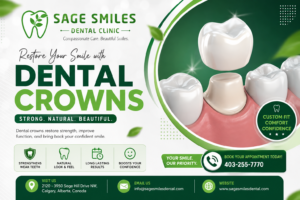
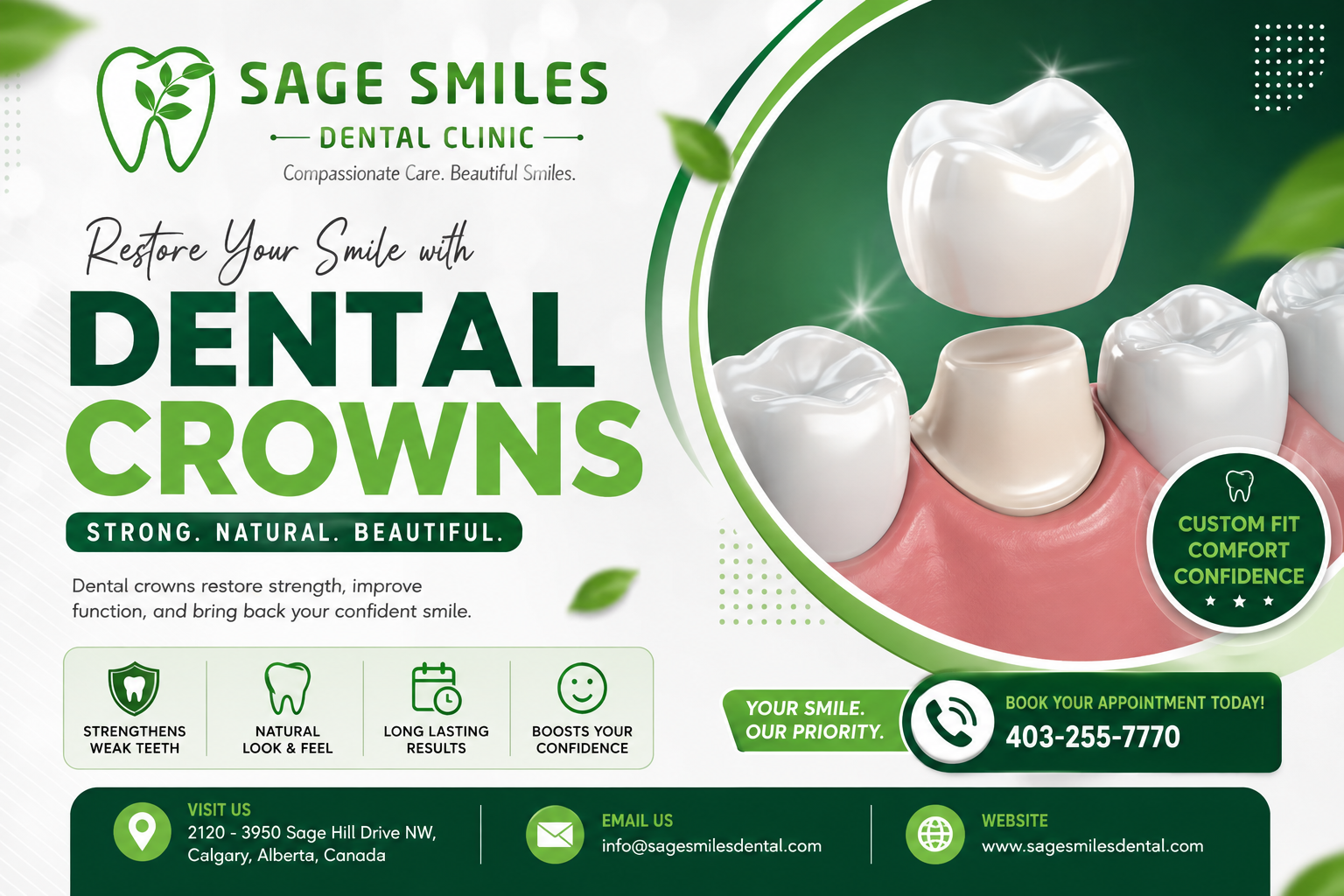
Cracked a tooth eating something you probably shouldn’t have? Or maybe your dentist mentioned you need a crown after a root canal, and you’re not totally sure why. Either way, dental crowns in Calgary are one of those treatments that sound more intimidating than they actually are — and honestly, once you understand what they do, the appeal becomes pretty obvious.
Here’s a real look at why crowns end up being worth it for so many patients.
They Save Teeth That Would Otherwise Be Lost
This is probably the biggest one. When a tooth is too damaged for a regular filling — think large cracks, deep decay, or after a root canal — a dental crown treatment in Calgary can often save it instead of pulling it out entirely.
Keeping your natural tooth matters more than people realize:
- It preserves the bone structure underneath, which extraction doesn’t
- Neighboring teeth stay in their correct position instead of shifting
- You avoid the extra cost and time of an implant or bridge down the line
A Tooth Crown in Calgary Restores More Than Looks
People often think of a tooth crown in Calgary as mostly cosmetic, but function matters just as much — arguably more. A crown restores your ability to actually bite and chew normally on that tooth again, which a cracked or heavily damaged tooth often can’t handle safely.
There’s also a protective side to it. A crown essentially acts like a cap, shielding whatever’s left of the natural tooth from further damage or infection.
Why Patients Trust an Experienced Crown Dentist in Calgary
Not all crown work is equal, and that’s where finding a solid crown dentist in Calgary actually pays off. A well-fitted crown should feel completely natural — no weird bite, no obvious color mismatch, nothing that gives it away.
A few things that separate a good crown from a mediocre one:
- Precise fit — poorly fitted crowns can trap bacteria underneath, causing new decay
- Color matching — especially important for front teeth
- Bite alignment — a crown that sits even slightly off can cause jaw discomfort over time
This is really a case where experience shows. A dentist who’s placed hundreds of crowns tends to get these details right the first time.
What Actually Happens During a Crown Procedure
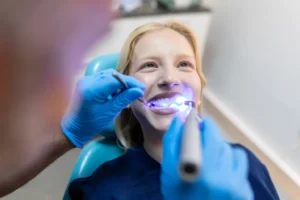
If you’ve never had one before, the process is probably less involved than you’d expect. On your first visit, the dentist numbs the area and shapes the damaged tooth down a bit, so there’s enough room for the crown to sit properly over it. They’ll then take an impression — either the old-school putty version or a digital scan, depending on the clinic — and send it off to a lab to have your custom crown made.
In the meantime, you’ll usually leave with a temporary crown, just to protect the tooth while the permanent one’s being made. That part typically takes one to two weeks. Once the real crown’s ready, you come back for a second visit where the dentist checks the fit, color, and bite, then cements it into place permanently.
Some clinics now offer same-day crowns using in-office milling machines, which cuts out the temporary crown step entirely — worth asking about if you’d rather avoid the two-visit process.
Signs You Might Actually Need a Crown
It’s not always obvious when a crown is the right call versus a filling or some other fix. A few common situations where crowns tend to come up:
- A tooth with a large filling that’s cracked or come loose
- Significant wear from grinding, especially if it’s affecting your bite
- After a root canal, since the tooth becomes more brittle afterward
- A tooth that’s cracked but not badly enough to need extraction
- Covering a dental implant to complete the restoration
If any of these sound familiar, it’s worth bringing up at your next checkup rather than waiting for the tooth to get worse.
The Case for Porcelain Crowns in Calgary
When it comes to material, porcelain crowns in Calgary are popular for a reason — they mimic the look of natural enamel better than almost anything else. Light reflects off porcelain in a way that looks convincingly like real teeth, which matters a lot if the crown’s anywhere visible when you smile.
They also hold up well over time. With decent care, a porcelain crown can realistically last over a decade, sometimes closer to 15-20 years depending on how it’s treated.
That said, porcelain isn’t the only option out there. Some clinics also offer zirconia crowns, which tend to be even stronger and are often used for back teeth that take more chewing force. Metal crowns still exist too, though they’re less common now mostly because of how they look — though for molars where appearance matters less, they’re still a solid, durable choice. A good dentist will walk you through the trade-offs based on where in your mouth the crown’s actually going.
Part of a Bigger Picture: Restorative Dentistry in Calgary
Crowns rarely exist in isolation — they’re usually one piece of a broader restorative dentistry in Calgary plan. Maybe there’s a filling that needs replacing first, or a root canal that came before the crown. A dentist who looks at the full picture, not just the one tooth, tends to get better long-term results.
That’s really the value of going somewhere that treats restorative work holistically instead of tooth-by-tooth in isolation.
Worth Talking to a Dentist About
If a dentist has brought up crowns for you, it’s worth actually having the conversation instead of putting it off. A damaged tooth usually doesn’t get better on its own, and catching it early often means a simpler, less invasive fix.
Call 403-255-7770 or book online with Sage Smiles Dental Clinic to talk through your options.
FAQ Section
- How long does a dental crown actually last? Depends a lot on the material and how well it’s looked after, but porcelain crowns commonly last 10-15 years, sometimes longer with good care.
- Does getting a crown hurt? Not really — most patients get numbed for the procedure, so the worst part is usually just the mild soreness afterward, similar to a filling.
- How many visits does a crown usually take? Typically two — one to prep the tooth and make an impression, and a second to fit the finished crown. Some clinics offer same-day crowns using digital scanning, which skips the wait.
- Can a crown fall off or come loose? It happens occasionally, usually from an old crown or one that wasn’t fitted quite right. If it does, it’s worth getting it looked at quickly rather than waiting.